
Introduction
According to a 2023 clinical review by Karger Publishers, topical curcumin significantly improves skin health because of its strong antioxidant, anti-inflammatory, and antimicrobial effects. Source: Karger Publishers (2023)
This scientific evidence forms the base for many of the most effective ayurvedic ingredients for skin used today.
Ayurveda blends ancient herbal wisdom with modern dermatology to create science-backed Ayurvedic skincare solutions, giving us natural yet clinically supported ways to brighten the skin, calm irritation, and strengthen the skin barrier.
For over 30 years, Sage Herbal has followed this same philosophy by combining trusted Ayurvedic herbs with research-driven formulation.
In this guide, you will learn how these top Ayurvedic ingredients work, why science supports them, and how they naturally enhance skin glow and overall skin health.
What Makes Ayurvedic Ingredients for Skin Effective?
Ayurvedic herbs are rich in antioxidants, anti-inflammatory plant actives, and natural nutrients that support long-term skin health. These herbs contain natural actives that help strengthen the skin barrier, protect the skin from everyday damage, and prevent dullness, acne, and pigmentation.
This powerful synergy of Ayurveda and dermatology-backed research makes these Ayurvedic ingredients for skin ideal for everyday skincare. Sage Herbal’s R&D team follows this dual approach by validating traditional herbs through modern testing methods, ensuring both safety and effectiveness.
What Ayurveda Says About Skin Types?
Ayurveda explains skin health through the balance of Vata, Pitta, and Kapha.
Vata Skin
- Dry, thin, and easily dehydrated.
- Imbalance leads to roughness, fine lines, and dullness.
- Calming herbs: Aloe vera, Ashwagandha, Licorice.
Pitta Skin
- Sensitive, combination type, may show redness.
- Imbalance causes inflammation, pigmentation, and acne.
- Cooling herbs: Manjistha, Sandalwood, Neem.
Kapha Skin
- Oily, thick, and congestion-prone.
- Imbalance causes acne, uneven tone, and whiteheads.
- Clarifying herbs: Turmeric, Neem, Gotu Kola.
When doshas become imbalanced, the skin loses radiance and becomes prone to dullness, breakouts, and pigmentation. Identifying your dosha helps you choose the right ayurvedic ingredients for skin, ensuring targeted and effective care.
Signs Your Skin Needs Ayurvedic Ingredients
You may benefit from ayurvedic ingredients for skin and ayurvedic herbs for glowing skin if you notice:
- Dullness or loss of glow
- Uneven pigmentation
- Redness, burning, or sensitivity
- Frequent acne or stress-related breakouts
- Fine lines or loss of firmness
- Irritation after chemical-heavy skincare
Herbs gently heal, nourish, and correct imbalances without harsh effects, making them a safer option when your skin feels overwhelmed or stressed.
Top 10 Ayurvedic Ingredients for Skin and Glowing Skin Benefits
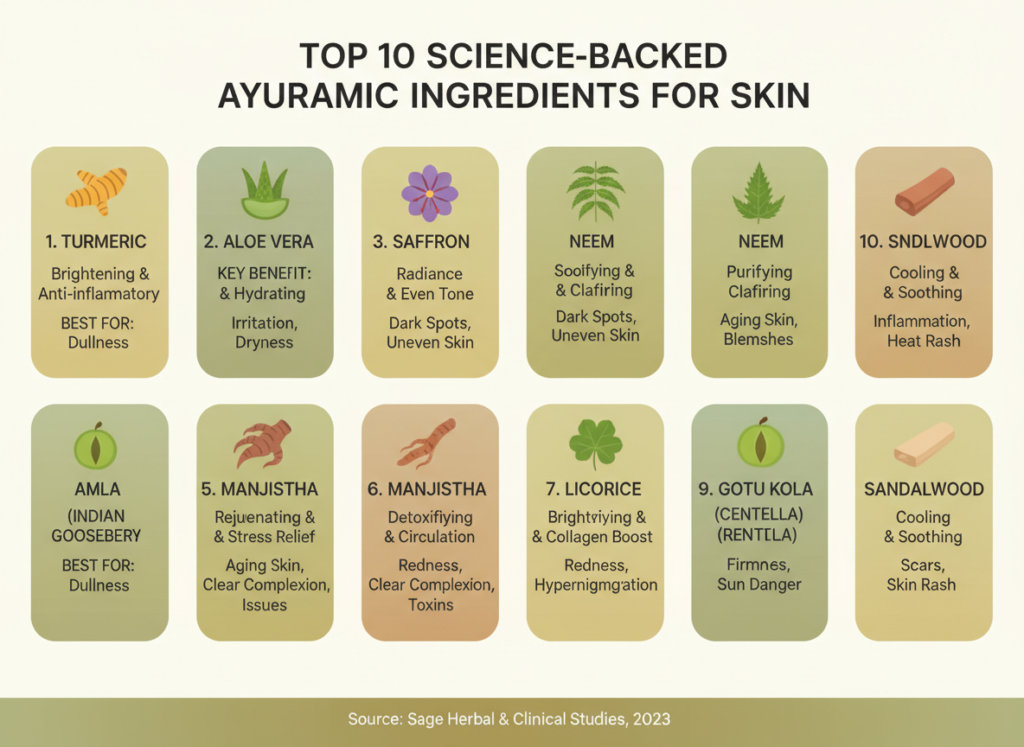
Here are the top ayurvedic ingredients for skin and other herbal skincare ingredients, their benefits, and usage tips supported by traditional wisdom and modern research.
1. Turmeric (Haridra) – Anti-inflammatory + Brightening
Turmeric is one of the most powerful ayurvedic ingredients for skin and one of the most trusted ayurvedic herbs for glowing skin because of curcumin(a plant compound in turmeric), which fights inflammation and reduces pigmentation.
Science says: Curcumin shows antioxidant, anti-inflammatory, and antimicrobial benefits (Karger, 2023).
Best for: All skin types, dullness, pigmentation
How to use: Face masks, serums, gentle cleansers
Extra guidance: Use 1–2x weekly or in low-strength daily serums and always patch tests.
You can also explore our Best Ayurvedic skin care products – Sage Herbals for deeper nourishment and glow.
2. Aloe Vera – Hydration + Healing
Aloe vera deeply hydrates and supports barrier repair. Its cooling nature makes it ideal for sensitive and acne-prone skin.
Benefits:
- Reduces redness
- Speeds healing
- Soothes irritation
Use in: Gels, moisturizers, calming serums
Extra guidance: Safe for daily use, especially after sun exposure or irritation.
3. Saffron (Kesar) – Radiance-Boosting Herb
Saffron has been traditionally used for improving complexion and glow.
Science-backed benefits: Brightening, tone correction, antioxidant support
Ideal for: Dullness, uneven tone
Use: Infused oils, night serums
Extra guidance: Best used at night for gradual radiance improvement.
4. Neem – Clarifying + Acne Control
Neem contains nimbidin, a well-studied antibacterial compound.
Benefits:
- Controls acne-causing bacteria
- Reduces inflammation
- Balances oil production
Best for: Oily, acne-prone skin
Use: Cleansers, spot gels, purifying masks
Extra guidance: Use 2–3× weekly; avoid over-dryness by pairing with a hydrating gel.
5. Ashwagandha – Powerful Anti-Aging Herb
Ashwagandha is an adaptogen that reduces oxidative stress, a major cause of premature aging.
Benefits:
- Boosts firmness
- Reduces fine lines
- Supports skin recovery
Use: Serums, creams, facial oils
Extra guidance: Ideal for nighttime routines for deeper repair.
6. Manjistha – Pigmentation & Detox Herb
Manjistha is a key herb used in many skincare formulas because it helps clear internal heat and supports the natural detox process, which can reduce pigmentation.
Why it works: Helps even skin tone and reduce dark spots
Best for: Pigmentation-prone skin
Use: Brightening creams, serums,and herbal masks
Extra guidance: Works best when used consistently 3–4× weekly.
7. Licorice (Yashtimadhu) – Natural Brightener
Licorice contains glabridin(a licorice compound that helps reduce pigment), a compound that helps reduce melanin activity.
Benefits:
- Brightens
- Reduces tanning
- Calms sensitivity
Use: Serums, soothing creams
Extra guidance: Great for sensitive skin; can be used daily in low concentration.
8. Amla – Vitamin C Powerhouse
Amla is a natural source of Vitamin C, which boosts collagen and radiance.
Benefits:
- Brightens
- Improves firmness
- Strengthens the skin barrier
Use: Serums, rejuvenating masks
Extra guidance: Best paired with sunscreen in the morning routine.
9. Gotu Kola (Centella) – Skin Barrier Support
Gotu Kola supports collagen development and helps fade scars.
Benefits:
- Reduces fine lines
- Strengthens skin barrier
- Smoothens texture
Use: Serums, creams, barrier repair formulations
Extra guidance: Ideal for daily use, especially for sensitive or damaged skin barriers.
10. Sandalwood – Cooling + Glow Enhancing
Sandalwood is revered for its calming and complexion-enhancing effects.
Benefits:
- Reduces tanning
- Controls inflammation
- Improves natural glow
Use: Calming packs, cleansers, serums
Extra guidance: Always patch test if you have sensitive skin.
How Ayurvedic Ingredients for Skin Work Together for Better Results?
When combined thoughtfully, these ayurvedic ingredients for skin offer:
- Deep antioxidant protection
- Brightening and pigmentation control
- Acne reduction and balanced oil levels
- Collagen support and firming
- A stronger, healthier skin barrier
- Reduced sensitivity and inflammation
This is why these herbs work well together in Ayurvedic skincare, which focuses on blend-based formulations rather than single herbs. The combined actives deliver broader and more effective skin benefits.
Ayurvedic Ingredients for Skin: Suitability by Skin Type
Here is a quick skin-type guide to help you choose the most suitable Ayurvedic ingredients for skin based on your specific concerns.
| Skin Type | Best Ayurvedic Ingredients | Why They Work |
| Dry Skin | Aloe vera, Ashwagandha, Licorice | Hydration, barrier repair, calming |
| Oily Skin | Turmeric, Neem, Gotu Kola | Clarifies pores, controls excess oil |
| Acne-Prone Skin | Neem, Turmeric, Aloe vera | Antibacterial, reduces inflammation |
| Pigmentation-Prone Skin | Manjistha, Licorice, Saffron | Brightening, melanin control |
| Aging Skin | Ashwagandha, Amla, Gotu Kola | Anti-oxidant protection, firming |
| Sensitive Skin | Aloe vera, Sandalwood, Licorice | Cooling, soothing, barrier support |
This simple guide helps you identify the right ayurvedic ingredients for skin based on your unique skin needs.
How to Use Ayurvedic Ingredients for Skin Safely and Effectively?
Ayurvedic herbs are powerful yet gentle, but correct usage ensures maximum benefit from ayurvedic ingredients for skin.
- Always Patch Test
Even natural herbs can trigger sensitivity. Apply a small amount on the inner arm and wait 24 hours. - Start With 2–3 Ingredients
Avoid mixing too many herbs at once. Ayurveda works best with balanced blends. - Use Consistently
Skin takes around a month to renew, and herbal actives work best when used regularly over time. - Safe Combinations
Turmeric + Aloe vera → Brightening + calming
Manjistha + Licorice → Pigmentation control
Gotu Kola + Amla → Anti-aging + collagen support - Avoid These Combinations
Strong exfoliants with turmeric
Neem with retinoids (can cause dryness)
Citrus oils on sensitive skin
Following these guidelines ensures Ayurvedic herbs support your skin effectively without irritation.
Common Myths About Ayurvedic Ingredients for Skin
Myth 1: Ayurveda is slow
Fact: Herbal activities start working from day one, especially antioxidant and anti-inflammatory compounds. Visible improvements appear in 2–4 weeks.
Myth 2: Natural products don’t need patch testing
Fact: Even natural extracts can irritate sensitive skin. Patch testing is essential.
Myth 3: Ayurveda has no scientific support
Fact: Many clinical studies, including the 2023 Karger review on curcumin, confirm the skin benefits of Ayurvedic herbs.
Myth 4: One herb suits everyone
Fact: Ayurveda is personalized. Skin type, season, and dosha determine which herbs work best.
Myth 5: More ingredients give better results
Fact: Balanced formulations work better than overloaded recipes.
Ayurvedic skincare works best when tradition, science, and the right method come together in your routine.
Science-Backed Benefits of Ayurvedic Ingredients for Skin
When used consistently, the top ayurvedic ingredients for skin and science-backed Ayurvedic skincare routines offer benefits supported by both Ayurveda and dermatology:
Brighter and more even skin tone:
Saffron, Licorice, and Manjistha help reduce melanin activity.
Reduced pigmentation and dark spots:
Clinically supported herbs like Manjistha and curcumin help reduce dark spots and uneven pigmentation.
Calmer acne and inflammation:
Neem, turmeric, and aloe vera fight bacteria and soothe irritation.
Stronger and healthier skin barrier:
Gotu Kola and aloe vera improve moisture retention and resilience.
Youthful firmness and reduced fine lines:
Amla and Ashwagandha support collagen production.
Better hydration and long-term glow:
Herbal ingredients nourish the skin deeply without overwhelming it.
Ayurvedic skincare works because it addresses both internal causes and external symptoms naturally.
Why Choose Sage Herbal for Ayurvedic Ingredients for Skin Care?
Sage Herbal stands out because it blends classical Ayurvedic wisdom with clinical research, ensuring safe, effective, and ethically crafted products.
1. Over 30 Years of Dermatology-Backed Expertise
Founded by the renowned Dr. P. N. Behl, Sage Herbal combines deep Ayurvedic knowledge with medical understanding.
2. Clinically Tested Herbal Formulations
Every formulation undergoes research, stability checks, and safety testing.
3. GMP, ISO, and FSSAI-Certified Manufacturing
These certifications ensure purity, quality, and global compliance.
4. Strong R&D Foundation
An in-house research team validates herbs using scientific methods.
5. Ingredient Transparency
Only pure, authentic herbs are sourced responsibly.
This credibility makes Sage Herbal a trusted choice for anyone seeking natural, science-backed skincare solutions crafted with integrity.
Frequently Asked Questions
1. Which Ayurvedic ingredient is best for glowing skin?
Turmeric, saffron, and manjistha are considered the most effective glow-enhancing herbs.
2. Are Ayurvedic ingredients safe for all skin types?
Yes, they are generally safe, but patch testing is important, especially for sensitive skin.
3. What is the most powerful Ayurvedic herb for anti-aging?
Amla and Ashwagandha are top choices because they support collagen and help reduce fine lines.
4. How do I use Ayurvedic ingredients for skin at home?
You can apply them as serums, face masks, cleansers, or infused oils based on your skin type.
Conclusion
Ayurveda and science-backed Ayurvedic skincare together offer powerful, time-tested solutions for skin health, now supported by modern clinical research. The best ayurvedic ingredients for skin brighten, calm, protect, and rejuvenate when used correctly and consistently.
With Sage Herbal’s science-backed formulations, you get the purity of traditional herbs combined with the trust of dermatology. Each product reflects Dr. P. N. Behl’s legacy of bringing together Ayurvedic wisdom and modern research.
To simplify your routine, explore Sage Herbals’ clinically tested, Ayurveda-based Skin Care formulations that support long-term skin health and natural radiance.
Please subscribe to our social channels for updates related to Ayurvedic skincare, research-based herbs, and wellness tips.
Instagram: Sage Herbals
Facebook: Sage Herbals
YouTube: Sage Herbals
LinkedIn: Sage Herbals Pvt.Ltd.
Leave a Reply
You must be logged in to post a comment.