
Introduction
Ayurvedic skincare is strongly connected with tradition and natural ingredients. However, expectations have changed over time. Today, people want more than tradition. They want to know if a product is safe, works the same every time, and suits real people’s skin in daily use.
Today, this proof mostly comes from well-planned safety checks on people and skin studies carried out under clear testing rules.
This change has made Clinical Testing for Ayurvedic Skincare more important than before. Brands, buyers, and even aware consumers now look beyond labels and claims. They look for clear proof that herbal products are safe for human skin.
When brands test carefully and openly, they protect users, follow rules, and build lasting trust in a crowded market.
This article explains what Clinical Testing for Ayurvedic Skincare means in real use, why it matters today, and how fair testing helps Ayurvedic brands build trust, meet rule expectations, and grow safely.
Why Clinical Testing Matters in Ayurvedic Skincare Today?
For a long time, “natural” was enough to earn trust. That is no longer true. Consumers, regulators, and global buyers now ask a more complicated question. Is the product proven to be safe and tested on real people under real usage conditions?
This is where clinical testing of Ayurvedic skincare becomes important and plays a key role. It helps brands stop guessing and show responsibility through recorded safety checks. In today’s market, trust is not built on tradition alone. It comes from proof that products stay safe during real, everyday use.
Industry research shows that the global Cosmetics and Personal Care Safety and Effectiveness Testing Market was valued at USD 5.3 billion in 2024 and is expected to reach USD 10.2 billion by 2033. This clearly shows the growing need for proper safety and performance testing in skincare and cosmetic products.
Because of this, clinical testing becomes necessary for brands that want credibility, export readiness, and long-term consumer trust.
What is clinical testing in ayurvedic skincare?
Clinical testing in ayurvedic skincare is a clear and fair process where herbal skincare products are tested on real people with different skin types. The main goal is to check safety, skin comfort, and how the product performs under controlled conditions before it reaches the market.
This testing helps brands understand how a product behaves on real skin, not just in theory or on paper.It focuses on skin compatibility and user safety, making sure the product is suitable for everyday use and does not cause unwanted skin reactions.
What Clinical Testing Means in Ayurvedic Skincare in the Context of Clinical Validation?
In the context of clinical validation, clinical testing in ayurvedic skincare means human-based evaluation carried out by following clear and defined testing rules. It is used to confirm the safety and skin compatibility of herbal formulations with proper proof. This is very different from unclear claims like “tested” or “dermatologically safe” that are made without supporting evidence.
Clinical testing involves
- Human safety and tolerance evaluation
- Observation under controlled usage conditions
- Documented results reviewed by qualified experts
Herbal ingredients also require proper validation. Being natural does not remove the risk of skin irritation, allergy, or incompatibility, especially when multiple herbs are combined in one formulation.
Dermatologists, Contract Research Organizations, and trained research and testing teams usually conduct clinical testing. When done correctly, it results in clinically tested herbal skincare products, safety-validated products, and research-backed formulations that can handle strict review and regulatory scrutiny.
Lab Testing vs Clinical Testing in Ayurveda
Understanding the Difference Clearly for This Testing Approach
Many brands mix up lab testing with clinical testing, but they are not the same. The difference becomes very clear when seen from a clinical testing point of view.
What lab testing covers
- Raw material quality testing
- Microbial safety checks
- Stability and shelf-life analysis
What clinical testing covers
- Human skin compatibility
- Irritation and sensitivity evaluation
- Performance observation during actual use
Lab testing checks the product itself. Clinical testing checks how the product behaves on human skin. Both are important, but one cannot replace the other. For exports and serious brand building, clinical testing of ayurvedic skincare plays a key role that lab testing alone cannot achieve.
Step-by-Step Clinical Testing Process for Ayurvedic Skincare Products
How Clinical Evaluation Works in Real Practice?
Below is how clinical testing of ayurvedic skincare is usually done in an organised and rule-following way.
Step 1: Pre-Clinical Safety and Formulation Assessment
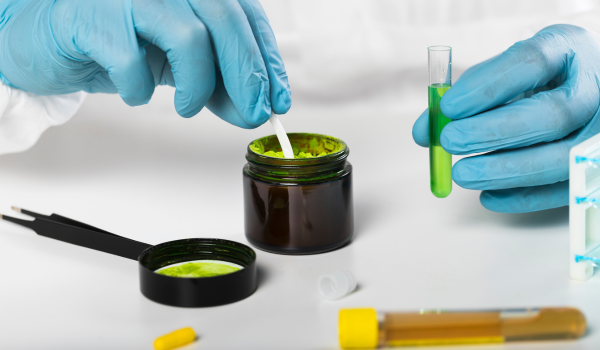
Ingredient safety is checked, ayurvedic references are reviewed, and basic lab testing is done to make sure the formulation is safe before moving into clinical testing.
Step 2: Dermatological Review and Protocol Design
In this step, dermatologists are involved, testing goals are clearly defined, and ethical approvals are taken where required for the testing process.
Step 3: Human Patch Testing and Skin Compatibility Studies
The product is applied in a controlled way on volunteers. Skin is then monitored for irritation or sensitivity, and observations are recorded using standard tracking methods.
Step 4: Usage-Based Clinical Evaluation
Short-term use trials are carried out to observe how the skin responds during normal use, without making medical claims, during the evaluation process.
Step 5: Data Analysis, Reporting, and Documentation
Results are interpreted carefully, claim support language is defined, and compliance-ready documentation is prepared within the clinical framework.
Each step is recorded, and conclusions are based on actual observations. This detailed process is what makes clinical testing trustworthy and reliable.
What Tests Are Usually Included in Clinical Evaluation?
Below are the common tests usually included in a standard clinical evaluation of skincare products.
- Patch testing for skin irritation and sensitivity
The product is applied in a controlled manner to check for redness, itching, or irritation, helping identify early skin reactions before regular use. - Short-term usage study under dermatologist supervision
Volunteers use the product for a defined period while dermatologists monitor skin response to ensure it remains safe during normal, everyday application. - Skin comfort and tolerance observation
Skin feel, comfort, and overall tolerance are observed to confirm that the formulation suits different skin types without causing discomfort. - Documentation of adverse reactions, if any
Any negative skin response is carefully recorded and reviewed, ensuring transparency and proper safety documentation within the clinical evaluation process.
Regulatory Requirements for Clinical Testing in Ayurvedic Skincare
Compliance Requirements for Ayurvedic Skincare Testing
This section is very important for brands that focus on rules, safety, and compliance while following this testing approach.
India
In India, CDSCO sets safety standards for ayurvedic skincare products, while AYUSH guidelines guide herbal formulation rules. Ayurvedic product regulations require proper safety proof, and clinical testing becomes important when products make performance-related claims during the clinical process.
Global Export Markets
USA
In the USA, there is a strong focus on skin safety. Human safety testing is expected as part of responsible clinical evaluation before products enter the market.
EU
The EU places high importance on strict documentation and safety assessment. There is a strong focus on human skin compatibility data linked to Clinical Testing for Ayurvedic Skincare.
Middle East
Middle East markets are increasingly asking for clear safety proof supported by Clinical Testing for Ayurvedic Skincare.
Overall, clinical testing of ayurvedic skincare helps reduce regulatory risk and allows brands to clearly separate rule compliance from marketing claims.
Common Myths About Clinical Testing in Ayurvedic Products
Clinical Testing for Ayurvedic Skincare Explained
Myth 1: Natural products do not need clinical testing
Natural ingredients can still cause skin reactions. Clinical testing helps protect both consumers and brands by checking safety properly.
Myth 2: Clinical testing destroys Ayurvedic authenticity
Clinical testing checks safety, not beliefs or philosophy. Ayurveda stays unchanged within the clinical testing process.
Myth 3: Only synthetic products are clinically tested
Herbal products are also expected to meet the same safety standards as other skincare products.
Myth 4: Lab tests are enough
Lab tests do not show how human skin reacts over time. Real skin observations matter more than assumptions.
Why Clinical Testing Is Critical for Brands and Private Label Buyers?
The Business Value of Clinical Testing for Ayurvedic Skincare
Clinical testing helps build consumer trust and long-term brand credibility by showing responsible safety practices. It supports export readiness, reduces the chances of compliance rejection, and strengthens the proof behind product claims.
It also lowers legal and brand image risk and makes product acceptance easier for retailers and distributors. For serious buyers, clinical testing of ayurvedic skincare shows responsibility and professionalism, not over-promotion, in a regulated market.
How Sage Herbals Approaches Clinical Testing Ethically and Scientifically?
Clinical Testing for Ayurvedic Skincare at Sage Herbals
Since 1990, Sage Herbals has followed a research-driven philosophy rooted in both dermatology and holistic healthcare, aligned with this testing philosophy. The foundation is rooted in the legacy of its founder, a dermatologist committed to ethical research and education.
The clinical testing process at Sage Herbals is supported by in-house R&D and laboratory facilities, dermatology-linked safety protocols, and a GMP-certified manufacturing setup. The focus remains on proper evaluation rather than exaggerated claims, backed by years of experience, scientific expertise, and transparent practices within the clinical framework.
Clinical Testing and Consumer Safety
What It Actually Protects Through Clinical Testing for Ayurvedic Skincare?
Clinical evaluation helps protect users from skin irritation, supports sensitive-skin needs, and builds confidence in long-term product use. It allows brands to identify possible skin reactions early and reduce risk before products reach customers. This makes everyday use safer and more reliable for different skin types.
Manufacturers also have a responsibility to make sure products are properly checked for safety and designed to support skin compatibility, without making medical promises. Responsible clinical testing helps brands act ethically while meeting consumer and regulatory expectations.
Frequently Asked Questions
1. Are Ayurvedic skincare products clinically tested today?
Yes, many responsible brands follow Clinical Testing for Ayurvedic Skincare to check safety on real human skin. This helps confirm skin comfort and reduces risk before products are launched in the market.
2. Is clinical testing mandatory for Ayurvedic skincare products?
Clinical testing is not always mandatory. However, it becomes important when brands make safety or performance-related claims. Export markets and informed buyers often expect Clinical Testing for Ayurvedic Skincare.
3. How long does clinical testing for Ayurvedic skincare usually take?
The time required depends on the testing method and product type. In most cases, Clinical Testing for Ayurvedic Skincare takes a few weeks under controlled and fair testing conditions.
4. Who conducts clinical testing for Ayurvedic skincare products?
Qualified dermatologists and approved research organizations conduct Clinical Testing for Ayurvedic Skincare. They follow clear testing rules and carefully record all results.
Conclusion
Ayurveda and science are not opposites. They work best when used together. When traditional knowledge is supported by proper evaluation, it builds confidence among consumers, regulators, and global partners.
Clinical testing of Ayurvedic cosmetics reflects responsibility, safety, and long-term trust. It helps strengthen brands, protect consumers, and support global acceptance through Clinical Testing for Ayurvedic Skincare. It also shows that a brand takes compliance, transparency, and ethical manufacturing seriously.
Sage Herbals stands out as a compliant and experienced manufacturing partner that understands this balance and applies it consistently across every stage of product development.
Learn how Sage Herbals develops clinically evaluated ayurvedic skincare products through ethical, transparent, and science-backed processes.
Please subscribe to our social channels for updates related to Ayurvedic skincare, research-based herbs, and wellness tips.
Instagram: Sage Herbals
Facebook: Sage Herbals
YouTube: Sage Herbals
LinkedIn: Sage Herbals Pvt.Ltd.
Leave a Reply
You must be logged in to post a comment.